
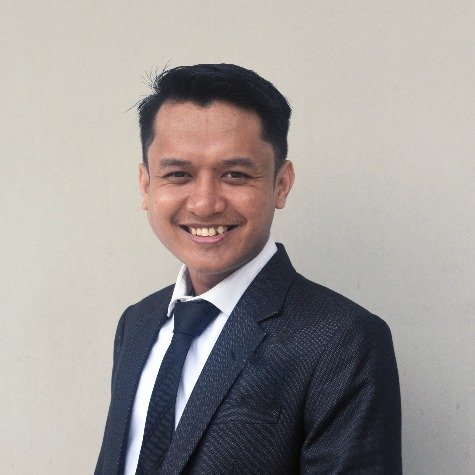
Randi Proska Sandra
“Designing Human-Centered, AI-Supported, and Sustainable Learning Technologies for Impact.”
Academic & Mentorship Indicators
Scholarly Publications
Supervised Students
Published Student Works
Research Projects
Bridging cognitive boundaries through
We investigate how artificial intelligence can serve as a cognitive scaffold that stimulates independent critical inquiry, rather than an uncalibrated shortcut that diminishes learner agency.
Integrated Academic Portfolio
Crafting Compelling Argumentative Writing for Undergraduates: Exploring the Nexus of Digital Annotations, Conversational Agents, and Collaborative Concept Maps
Randi Proska Sandra, Wu-Yuin Hwang, Afifah Zafirah, Uun Hariyanti, Engkizar Engkizar, Ahmaddul Hadi, Ahmad Fauzan
Journal of Educational Computing Research
Argumentative writing is a fundamental aspect of undergraduate students’ academic and scientific writing related to critical thinking and problem-solving skills. However, previous studies have shown that students face various difficulties with argumentative writing, such as unclear and illogical ideas, less-structured arguments, and unbalanced interpretation of issues, data, and evidence. This study aims to improve the argumentative writing skills of undergraduate students by integrating computer-supported argumentative writing tools, such as annotation, conversational agents (CAs), and collaborative concept maps, into an online learning management system. Since the study was conducted during the COVID-19 pandemic, these tools can support meaningful learning activities and investigation in argumentative writing. The researchers divided sixty participants into the experimental group ( N = 30) and the control group ( N = 30). The results showed that the experimental group’s writing achievements outperformed the control group, and the three tools effectively improved the five elements of argumentative writing, including claims, grounds, warrants, backings, and rebuttal. Furthermore, a deep analysis found that the number of annotations, valid CAs’ responses, and argument nodes on collaborative concept maps can significantly predict students’ argumentative writing development. Moreover, students perceived that the incorporated tools could effectively improve their argumentative writing skills.
Nutrysmart: An Intelligent System for Nutritional and Family Services in Preventing and Managing Nutritional Problems in West Sumatra
Nutrysmart is an innovative smart system for family nutrition services integrated into mobile and web-based applications, developed by a consortium of higher education institutions in West Sumatra under the leadership of Universitas Negeri Padang (UNP). This project successfully secured official fun
7 Strategic Research Clusters
Human–Computer Interaction
Investigating user behavior, cognitive load, multimodal interfaces, and user-centered design paradigms in digital learning environments.
Programming & Computing Education
Pedagogical patterns, novice code comprehension, automated feedback systems, and computational thinking development.
Educational Technology
Design, implementation, and rigorous evaluation of digital platforms fostering high engagement and collaborative learning.
Learning Analytics
Extracting actionable diagnostic insights from student trace data to improve pedagogical interventions and retention.
Social Informatics
Examining the socio-technical interplay between information technology adoption, institutional dynamics, and digital ethics.
Empirical Software Engineering
Applying empirical methodologies, repository mining, and human factor studies to software engineering practices.
Sustainable & Green Computing Education
Embedding carbon awareness, resource-efficient computing, and sustainability ethics into computing curricula.
Embracing AI in Computing Education Without Losing Human Agency
AI can help students write and debug code, but a working program does not always show what they understand. Computing education should help students question AI output, test their ideas, and explain the decisions behind their work.
Mentees Participates in the Incubation Program for the Waste Traceability WebApp Design Competition at ITS Surabaya
Representing the university, the team is under the supervision of Randi Proska Sandra, S.Pd., M.Sc. It comprises Delano Yusuf Habibic (Student ID 22343040, Bachelor of Informatics) as the team leader, alongside Selvi Afmailia (Student ID 22130018, Bachelor of Applied Industrial Electrical Engineering) and Yazid Aqil Assalam (Student ID 22343014, Bachelor of Informatics) as team members.
Interested in Research Collaboration or Academic Advising?
I welcome interdisciplinary research partnerships, scientific keynote/review invitations, and student inquiries in Human–Computer Interaction and AI in Education.